How Far Apart Should Cornhole Boards Be?
Cornhole has quickly become one of the most popular outdoor games for backyard parties, tailgates, and tournaments. Simple to learn yet challenging to master, it offers endless fun for players of all ages. However, setting up the game correctly is crucial for fair competition and optimal enjoyment. A common question arises: How far apart should cornhole boards be?
Accurate board placement ensures consistency, fairness, and the intended level of difficulty. Whether you’re a casual player or an aspiring tournament participant, knowing the proper distance makes a significant difference in gameplay.
Official Cornhole Board Distance
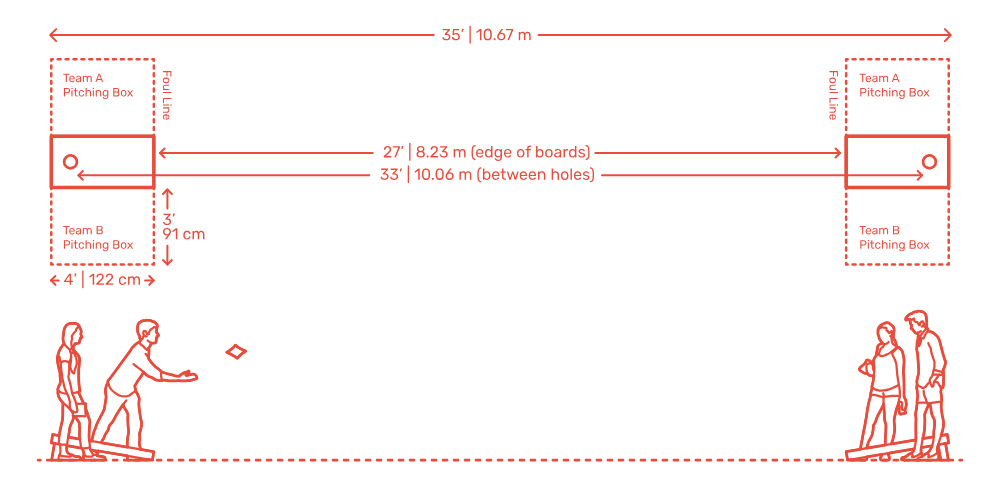
According to the American Cornhole Association (ACA) and other official governing bodies, the regulation distance between cornhole boards is 27 feet. This measurement spans from the front edge of one board’s platform to the front edge of the opposing board’s platform.
Maintaining this distance allows players to develop consistency in throwing technique while providing an appropriate challenge. Professional tournaments always adhere to these dimensions, ensuring that every match remains fair and standardized.
Measuring the Correct Distance
Setting up your boards at the precise distance doesn’t require advanced tools. A standard measuring tape does the job effectively.
1. Place Both Boards
Begin by positioning both boards facing each other on a flat, level surface. Ensure that each board’s front edge aligns roughly where you want the final placement.
2. Use Measuring Tape
Extend your measuring tape from the front edge of one board directly across to the front edge of the other. Confirm that the measurement reads exactly 27 feet.
3. Adjust and Align
After measuring, make any necessary adjustments to ensure both boards sit level and stable. Double-check the distance to verify accuracy before starting your game.
Pitcher’s Box and Throwing Line
Besides board distance, knowing where players should stand also contributes to proper setup. Each board includes designated areas for tossing bags, called pitcher’s boxes. These areas measure 4 feet wide and extend 3 feet to each side of the board.
Players must remain within their box while throwing. The foul line, marked at the front edge of the board, serves as the closest allowable point for releasing the bag.
Recreational vs. Regulation Play
Although official matches require the 27-foot separation, casual games often allow for adjustments based on space or player preference.
- Backyard Games: Families with limited space may set boards between 20 to 25 feet apart to accommodate younger participants or beginners.
- Children’s Games: When introducing kids to cornhole, placing boards closer—around 15 to 20 feet—helps build confidence and enjoyment.
- Indoor Play: Small venues or tight spaces might necessitate even shorter distances while still preserving the essence of the game.
Adjusting the distance keeps the experience enjoyable without sacrificing competitiveness for newer players.
Cornhole Board Dimensions
Besides spacing, understanding board specifications helps ensure you’re practicing or playing under proper conditions.
- Length: 48 inches (4 feet)
- Width: 24 inches (2 feet)
- Hole Diameter: 6 inches, centered 9 inches from the top edge
- Front Height: 3–4 inches off the ground
- Back Height: 12 inches off the ground
Regulation boards conform to these dimensions for consistency across games and tournaments.
Cornhole Bag Specifications
Matching official bag standards further enhances gameplay authenticity.
- Size: 6 inches by 6 inches
- Weight: 15–16 ounces
- Material: Durable fabric, often filled with resin pellets or corn kernels
Playing with properly sized bags ensures consistent throws and scoring accuracy.
Surface and Environmental Considerations
Ideal playing surfaces contribute significantly to the overall experience. Smooth, level ground prevents boards from wobbling or shifting during gameplay.
- Grass: Common for backyard games but may require leveling.
- Concrete or Asphalt: Provides a stable surface but may affect bag slides.
- Indoor Flooring: Smooth indoor venues allow for predictable bag movement.
Wind conditions can also influence outdoor games. Positioning boards with wind direction in mind minimizes unpredictable throws and maintains fairness.
Scoring and Gameplay Basics
Understanding basic scoring rules enhances your appreciation for proper board setup.
- Each bag that lands on the board earns 1 point.
- Bags that pass through the hole score 3 points.
- Only one team scores per round, using a cancellation scoring system.
Playing with correct distances encourages skill development and ensures scores reflect player ability rather than setup inconsistencies.
Importance of Consistent Distance
Maintaining uniform board spacing helps:
- Develop accurate throwing habits.
- Prepare players for tournament conditions.
- Promote fair competition among all participants.
- Prevent unnecessary disputes about playing field advantages.
Even slight deviations from the official distance may alter gameplay dynamics, making practice at the correct distance invaluable for serious players.
Helpful Tools for Easy Setup
Several accessories simplify the process of setting up your boards consistently.
- Pre-measured strings or cords: Designed specifically for cornhole, these tools save time while ensuring accuracy.
- Marking stakes: Helpful for outdoor setups where permanent markers might be difficult to install.
- Portable measuring tapes: Compact and easy to carry, ideal for spontaneous games.
Using these aids guarantees you always enjoy the game as intended, no matter where you play.
Conclusion
Setting cornhole boards at the proper distance creates a level playing field and elevates the quality of each match. For official games, maintaining a 27-foot separation between front edges ensures fairness and consistency. Recreational play may allow for minor adjustments based on available space or player experience.
By adhering to correct measurements, practicing on regulation equipment, and considering environmental factors, players maximize their enjoyment and skill development. Whether you’re hosting a friendly backyard gathering or preparing for competition, properly spaced boards form the foundation of every great cornhole game.